
Why Food Is One of the Most Important Styling Decisions
When couples think about styling, they often think first about flowers, candles, and linens.
Food usually comes later, treated as a separate decision, or something purely practical.
But food is one of the most powerful styling tools you have.
Not because of how it looks, but because of how it shapes the way people feel, move, and connect throughout the day.
Food Sets the Pace of the Day
The way food is served quietly dictates the rhythm of a wedding.
A long, shared lunch encourages guests to stay seated, talk, and relax into the moment.
A formal, fast-paced service moves people along.
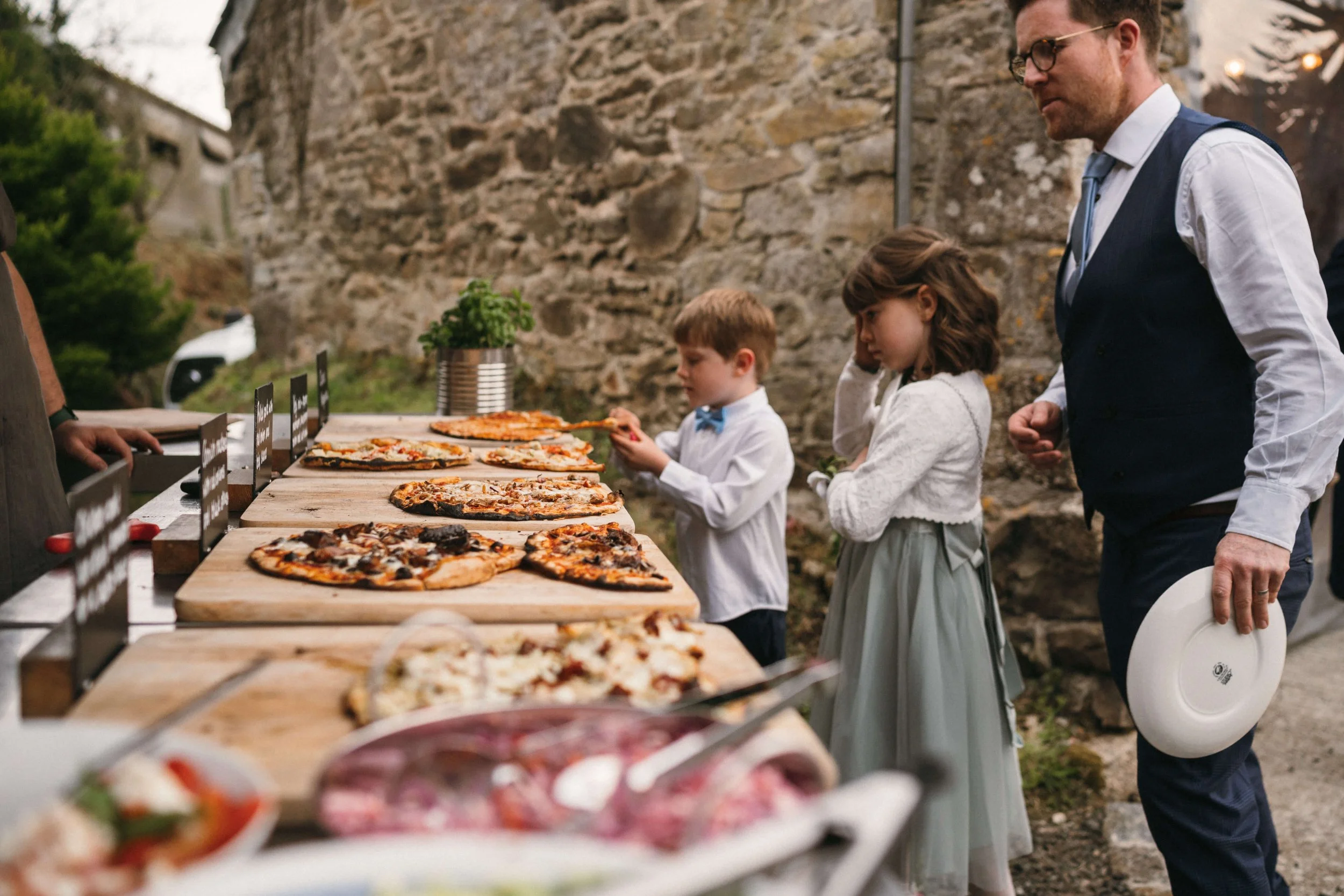
A grazing-style set-up invites movement, mingling, and spontaneity.
None of these approaches are right or wrong, but they all create very different atmospheres.
When food is considered early in the planning process, it can support the natural flow of the day rather than interrupt it.
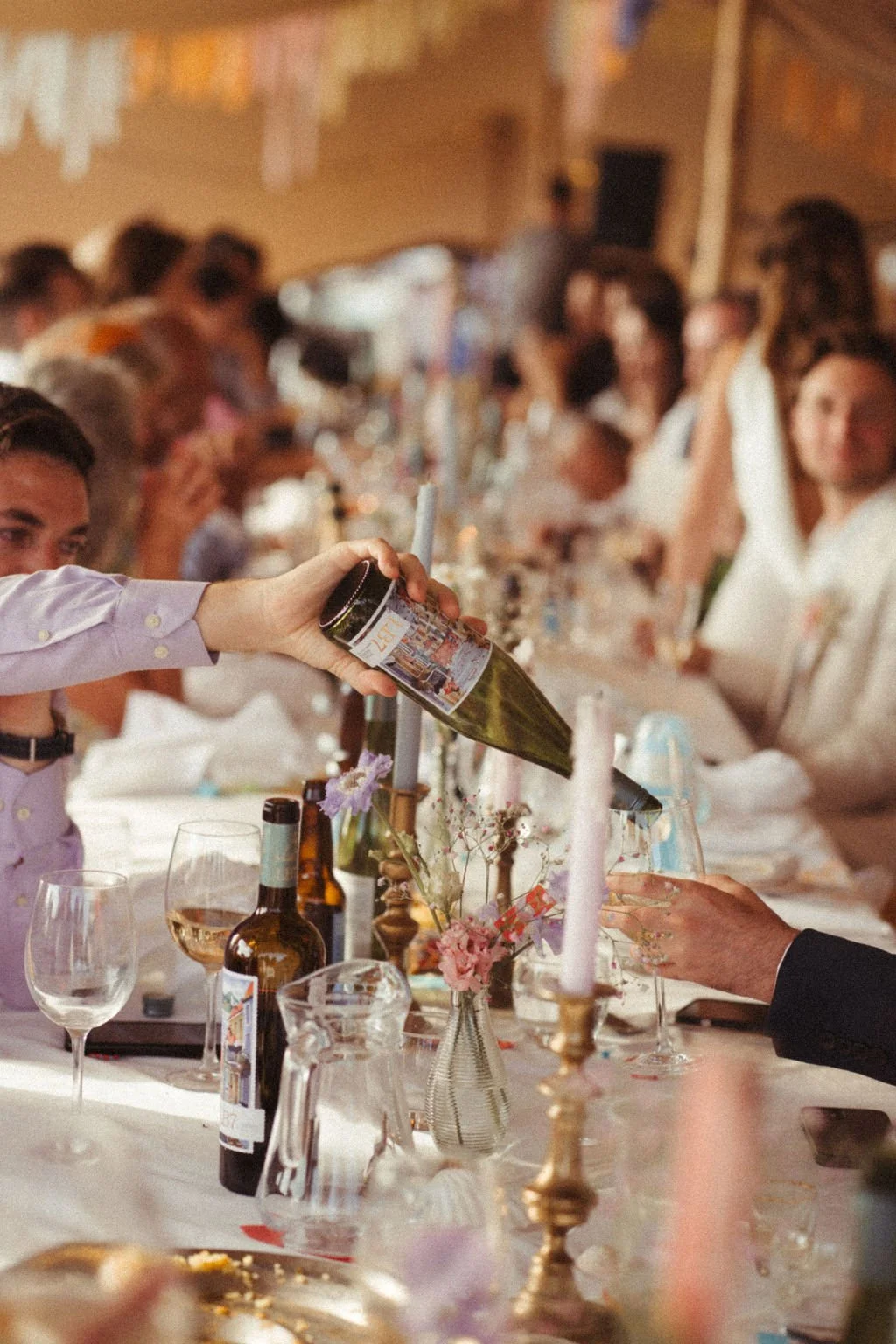
Poured slowly. Enjoyed together.
How People Eat Is How They Gather
Food affects how people interact far more than most décor choices.
Shared dishes create softness and intimacy.
Plated courses create structure and focus.
Food stations break down formality and encourage conversation.
Even the height of tables, the weight of cutlery, or the size of plates subtly influence how long guests linger and how relaxed they feel.
This is styling at its most understated, shaping behaviour without being obvious.
Visual Styling Doesn’t Stop at the Table
Yes, food can be beautiful, but that’s not the point.
Styling is about cohesion. The food should feel like it belongs in the space.
Rustic, generous dishes sit comfortably alongside textured linens and candlelight.
Refined plates suit structured tables and clean lines.
Abundant sharing platters feel natural in long, relaxed settings.
When food styling aligns with the wider design, nothing feels forced, everything feels intentional.
Timing Matters More Than Perfection
Some of the most memorable weddings aren’t the most visually precise, they’re the ones that feel unhurried.
Allowing time for courses to unfold, for guests to talk between bites, and for moments to breathe creates an atmosphere that can’t be manufactured.
Food, when paced thoughtfully, becomes part of the emotional experience of the day, not just a schedule item.
Why This Matters in Planning
When food is treated as an afterthought, it often disrupts the flow of the day.
When it’s considered early, alongside styling, layout, and timing, it becomes one of the strongest tools for creating calm, connection, and atmosphere.
This is why I always think about food in the same breath as candles, tables, and timelines.
Because guests might not remember the flowers exactly.
But they’ll remember how long they stayed at the table.
How easy conversation felt.
And how the day allowed them to slow down.
A Final Thought
Good styling is rarely loud.
It’s felt rather than noticed.
And food, when chosen with intention, is one of the quiet details that holds everything together.
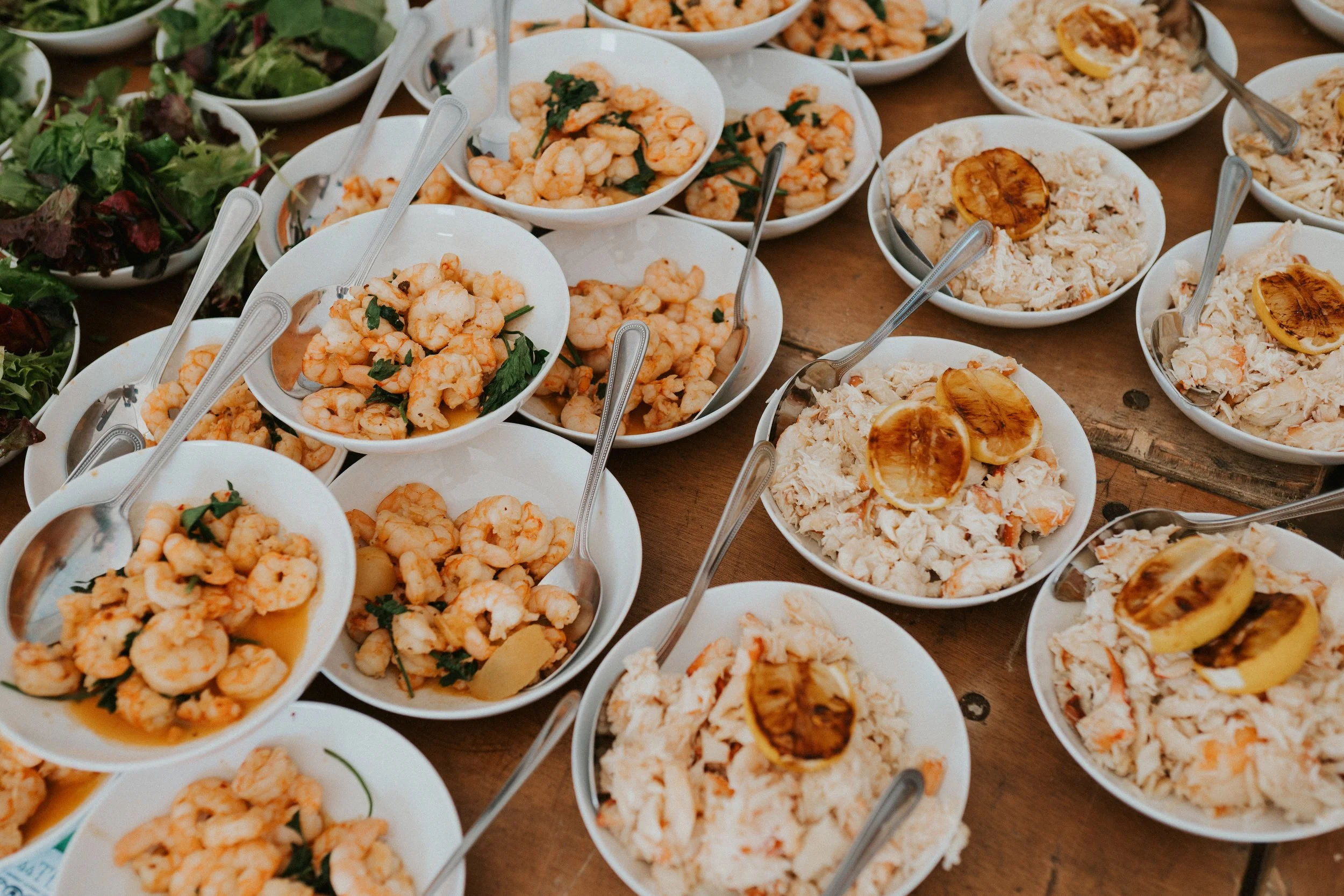
Food that invites people to stay.
Where conversations linger.